Inside an iGaming Content Team: Who Does What
Content work in iGaming is routinely underestimated, because from the outside it looks like posting. An operator budgets for one person, hires a generalist, and six months later has a page that publishes regularly and converts nothing.
The work is actually three distinct roles with different skills and different failure modes. Understanding the division is useful even for teams that cannot staff all three — because the role you leave out determines how the operation will fail.
The content manager: decides what exists
The least visible role and the one that determines whether the other two are useful.
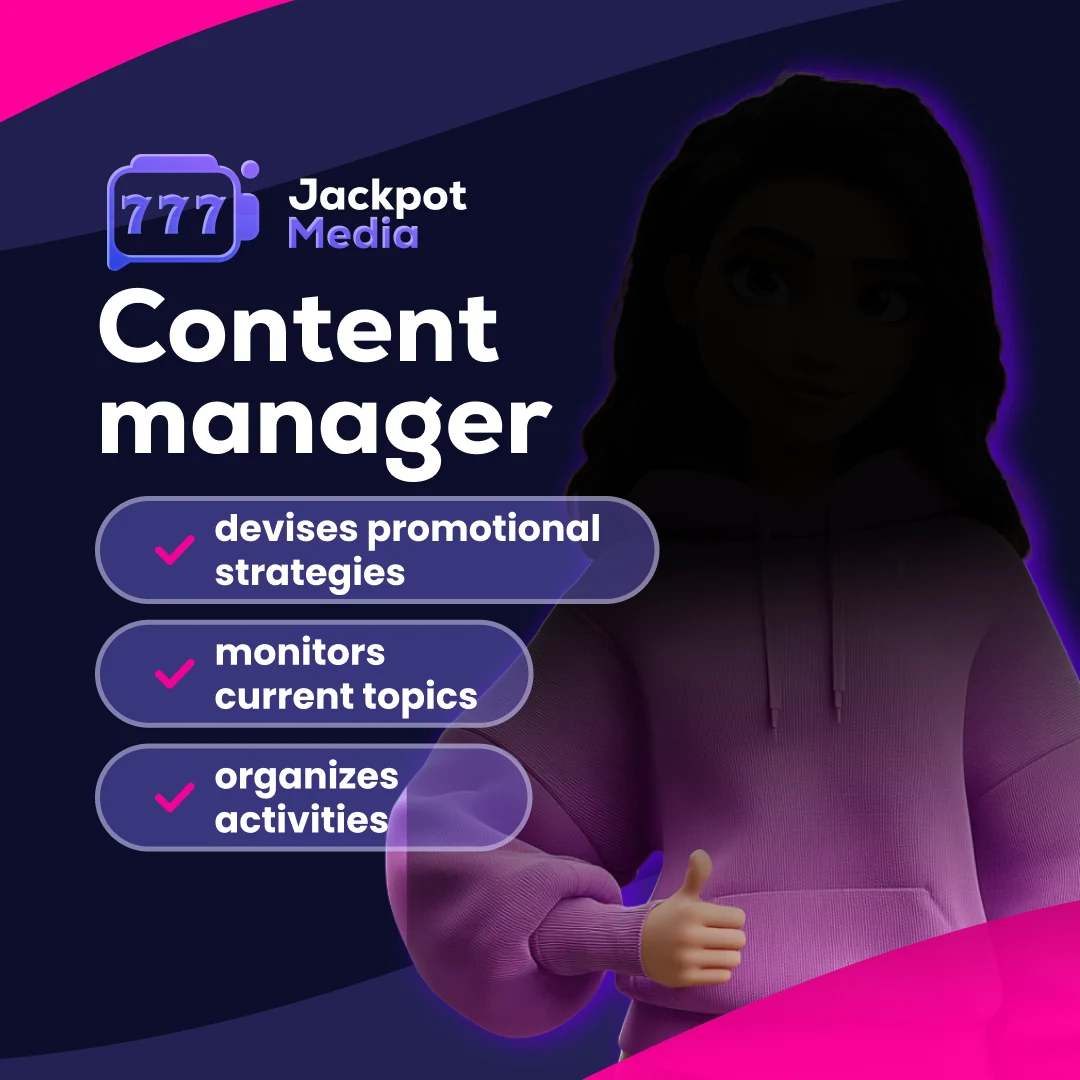
A content manager decides what gets made and why. That means a promotional strategy that connects to actual business objectives rather than a posting calendar; monitoring what is currently relevant in the market, in the sport, in the game catalogue; and organising the activities — campaigns, launches, seasonal moments — that give the rest of the work a reason to exist.
It is also the role that owns segmentation: knowing that a registered non-depositor, a first depositor and a lapsed player need different messages, and making sure those messages get made.
When this role is missing: the team produces competent work with no cumulative effect. Everything is individually fine and nothing builds, because nobody decided what the page is for.
The designer: decides what it looks like
The role most often outsourced and most often misunderstood as decoration.
A designer creates the visual work, but the substantive part of the job is consistency: making sure the brand's identity is recognisable across dozens of pieces so that a regular reader could identify the source with the logo removed. That recognisability is what turns repeated impressions into memory rather than into repeated expense.
In iGaming there is an additional constraint that general designers often miss: the visual language has to look current without reading as youth-targeted, and it has to accommodate mandatory compliance elements without looking like a legal document.
When this role is missing: every piece looks slightly different, nothing is remembered, and the brand has to buy attention again on every impression.
The video maker: decides what moves
The most in-demand role, because the formats that dominate distribution are video.
The job is not only filming and editing. In iGaming specifically it means capturing gameplay in a way that reads in the first second, choosing which moment of a game is the one worth showing, and producing at a rate that keeps pace with how quickly video formats date.
The eye-catching effects that get associated with this role are the smallest part of it. The hard part is volume without decline in quality, and knowing which six seconds of a ten-minute session are the six that matter.
When this role is missing: the team competes in static formats in feeds that increasingly favour video, and pays more for less reach.
How the three roles interact
The common structural mistake is treating them as a pipeline: manager plans, designer designs, video maker films, publish.
That sequence produces content that satisfies the brief and fails in the feed, because the person who understands what performs in the format was involved last. The teams that work well run the opposite way: production constraints inform planning, and the person who knows what a game looks like on camera has a say in which game is promoted.
The second common mistake is measuring the team on output. Volume of posts is the easiest thing to count and the least connected to whether the work contributed to registrations, deposits or retention.
If you can only hire one
Most operators cannot staff three roles immediately. The order that causes least damage:
Start with the content manager if the problem is that content exists but achieves nothing. A strategist can commission design and video externally; a designer cannot invent a strategy.
Start with the video maker if the problem is that the work is sound but nobody sees it, and the market's dominant formats are video.
Start with the designer if the brand is genuinely unrecognisable and already producing enough volume that inconsistency is the binding constraint.
Outsourcing works better for design and video than for the manager role, because the manager needs continuous context about the business that an external supplier rarely has.
Key takeaways
- iGaming content is three distinct roles, and the one you omit determines the specific way the operation will fail.
- The content manager decides what exists and owns segmentation; without it, work is competent but never compounds.
- The designer's substantive contribution is recognisability across many pieces, not decoration of individual ones.
- The video maker's hard problem is sustained volume and knowing which moment of a game is worth showing.
- Running the roles as a strict pipeline produces content that satisfies the brief and fails in the feed.
Connecting content work to outcomes
Judging a content team fairly requires knowing which registrations and deposits their work contributed to — which is an attribution question rather than a content one. If your reporting cannot connect the two, talk to our team →
Disclosure: This blog may include references to services we offer. Our team develops Professional iGaming Platforms, and provides consulting for gaming operators on analytics, compliance, and platform setup.
Author: Alex S
Growth Department at Jackpot Media. iGaming content and traffic.